
Web Dev
Building Scalable Web Applications with Modern PHP Frameworks
A comprehensive guide to developing robust, scalable web applications using modern PHP frameworks like Laravel and Symfony.
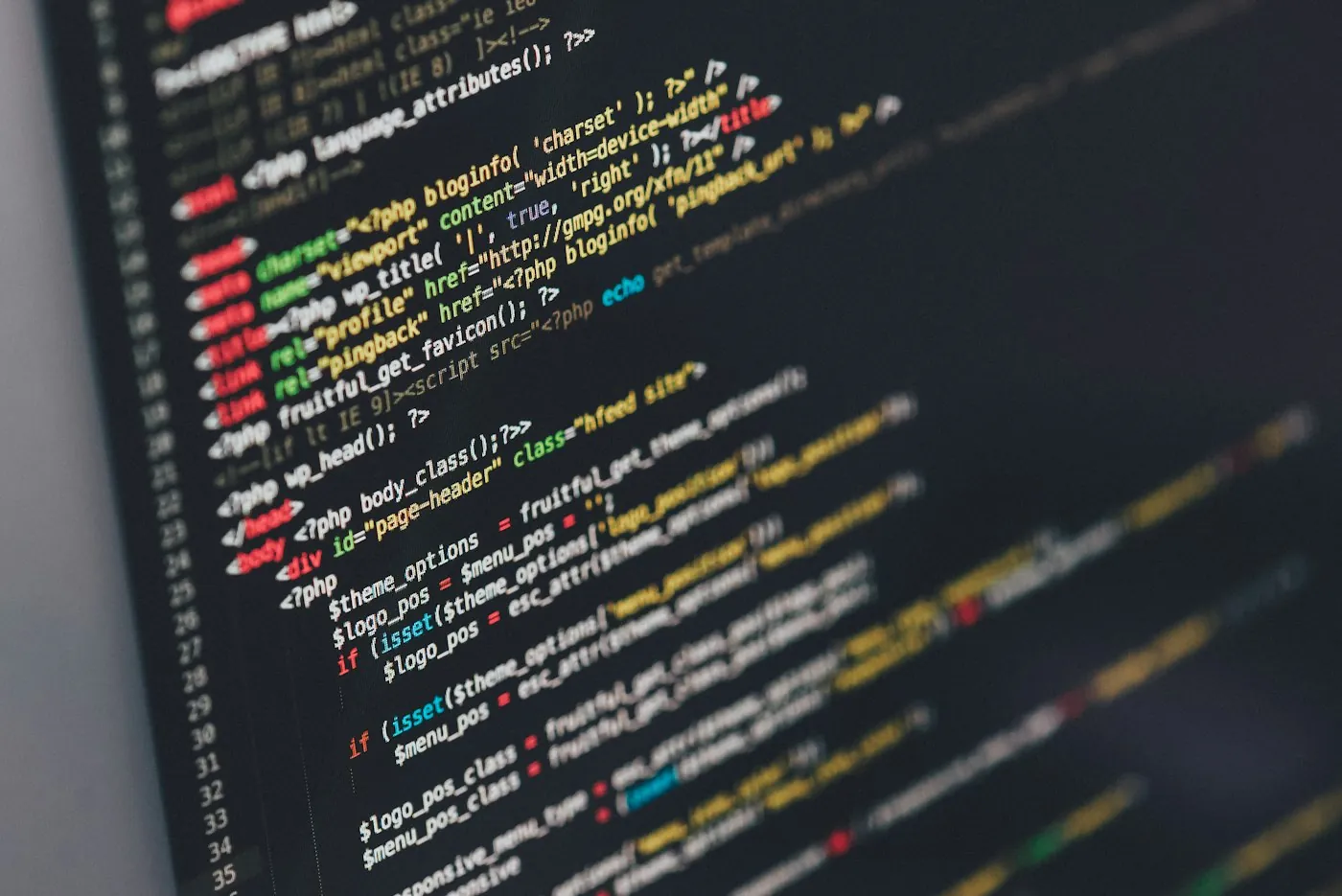
PHP still powers a large share of the web — from WordPress to Wikipedia to a quiet majority of business applications. But "PHP" in 2025 means something very different from the language of 2010: typed properties, enums, attributes, fibers, JIT, and a mature tooling ecosystem. Combined with frameworks like Laravel and Symfony, it is one of the most productive platforms for building business applications. Here's how to use it to build things that scale — in traffic and in complexity.
PHP is not what you remember
Modern PHP (8.x) brings serious engineering features: strict types, readonly classes, first-class enums, pattern matching on the horizon, and composer-based dependency management that rivals any ecosystem. Performance has improved dramatically across versions — the same application, upgraded from PHP 7 to 8.3, typically serves measurably more requests per second on the same hardware. The frameworks have matured in parallel: Laravel's developer experience and Symfony's architectural rigor are both enterprise-grade.
Architecture that scales
Scalability is mostly about separating concerns so each part can grow independently:
- Thin controllers. A controller validates input and delegates — business logic belongs in services (Symfony's doctrine of " skinny controllers") or actions (Laravel's single-action classes).
- Domain services & repositories. Keep framework code out of your business rules so they stay testable and portable.
- Queues for anything slow. Emails, PDFs, imports, API calls — push to a queue (Laravel Queues, Symfony Messenger) and return instantly. A user should never wait on an SMTP handshake.
- API-first. Serve JSON from your controllers; render the UI (Blade/Twig or a JS frontend) from the same domain layer. You get a mobile client "for free" later.
// Laravel: controller stays thin, work goes to a queued job
public function store(OrderRequest $request) {
    $order = $this->service->create($request->validated());
    GenerateInvoice::dispatch($order);   // async
    return response()->json($order, 201);
}
Performance & caching
The performance ladder for PHP applications, cheapest wins first:
- OPcache — compile once, serve many. Non-negotiable on any server.
- Config & data caching — cache config, routes, and expensive reads (Redis or even APCu). Frameworks make this a one-liner.
- HTTP caching — ETags and Cache-Control headers so the browser and CDN do the work instead of PHP. A CDN in front of static assets is the highest-leverage perf decision you can make.
- Octane / RoadRunner / FrankenPHP — application-level runtimes that keep the framework booted between requests, for when you need to squeeze a single server.
The usual mistake is jumping to step 4 while the database is doing N+1 queries per page. Profile first: a single eager-loading fix often beats an infrastructure project.
Data layer discipline
- Migrations for every schema change — schema lives in version control, environments stay identical.
- Eager-load relations you know you'll need; measure with the query log, not intuition.
- Indexes that match real queries — the slow-query log is your roadmap.
- Paginate everything that returns lists, with cursor pagination for large datasets.
Deployment & operations
Modern PHP deploys are boring in the best way: CI runs tests and static analysis (PHPStan/Psalm), builds the artifact, and deploys with zero downtime (release directories + symlink switch, or containers). Add structured logging, uptime checks and error tracking (Sentry or self-hosted equivalents), and you have operational visibility most stacks would envy.
When PHP is the wrong tool
Honest engineering means knowing the boundaries. PHP and its frameworks shine for request/response applications: sites, APIs, dashboards, business tools. It is a weaker fit for: long-running websocket-heavy realtime systems (Node.js or Elixir serve those better), heavy CPU-bound computation in the request path (move it to a queue with a worker in any language), and data-processing workloads where Python's ecosystem is simply richer. A common — and good — architecture mixes them: PHP for the application, Python workers for the heavy lifting, connected by a queue. Choose per problem, not per tribe.
The testing pyramid, PHP edition
Scalable applications are testable applications. The pragmatic mix: many fast unit tests on domain services (no framework, no database — milliseconds), fewer integration tests against a real database (SQLite in-memory for speed, or Docker for fidelity), and a thin layer of end-to-end tests covering the flows that generate revenue. Laravel and Symfony both support this shape natively — PHPUnit/Pest, factories and fixtures, mailed-object fakes so email tests never touch SMTP. The payoff compounds: every refactor and dependency upgrade becomes boring, and boring is exactly what you want in production software.
Key takeaways
- Modern PHP 8.x is typed, fast and productive — judge it by today's benchmarks, not old memories.
- Scalable architecture = thin controllers, domain services, queues, API-first.
- Fix database queries before buying infrastructure.
- Automate deploys and monitor errors from day one.
Need a scalable PHP application built — or rescued? Contact me; Laravel and Symfony are home turf.
Views are counted anonymously on the server — one per visitor every 30 minutes, no tracking.